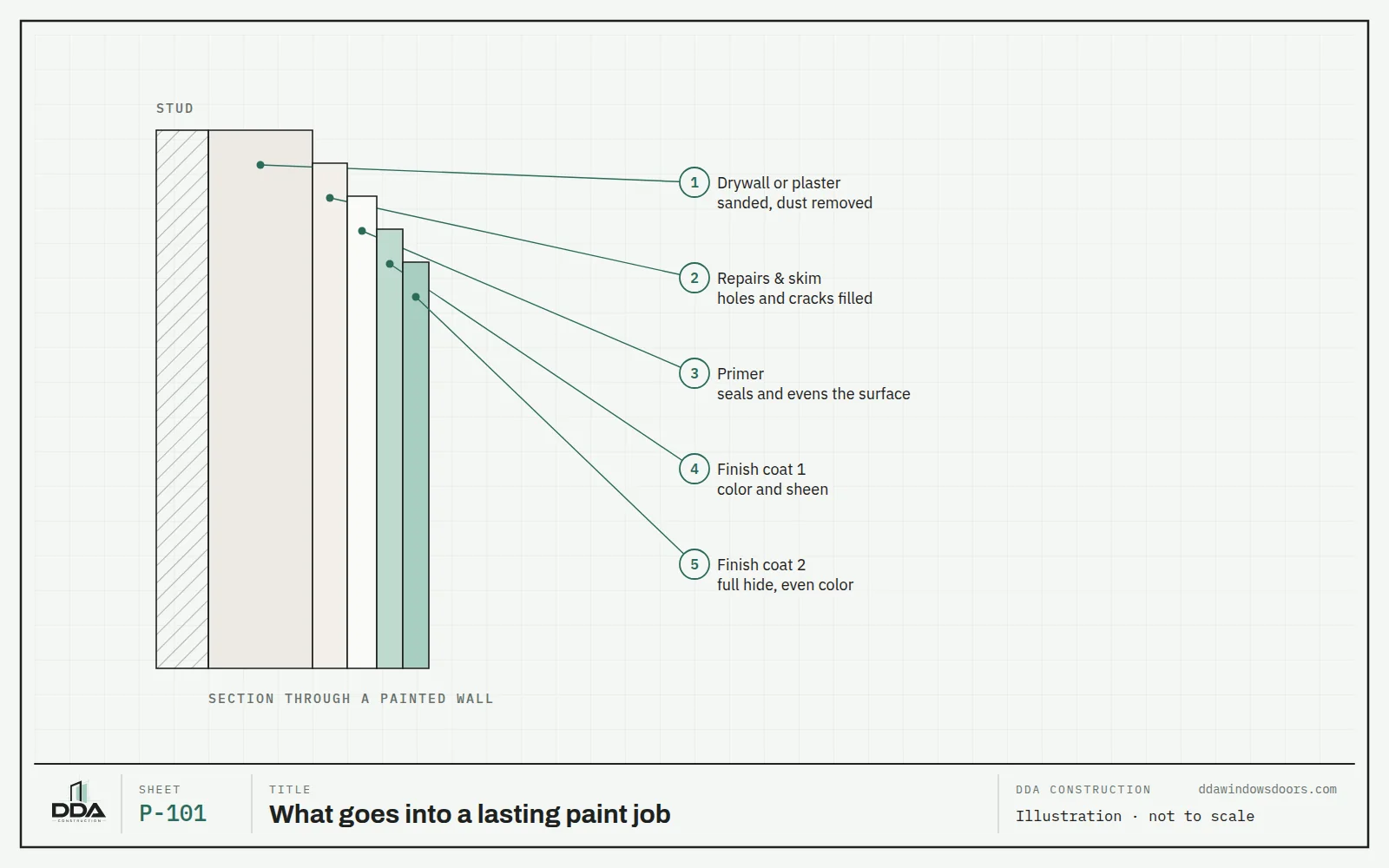
DDA Construction provides interior and exterior painting in Montgomery County, Washington DC and Northern Virginia, including walls, ceilings, trim, siding, doors and windows. A lasting job means surface repair, primer where needed and two finish coats. Exterior painting in the DC area depends on temperature: standard latex paints need about 60°F or warmer, while low-temperature products can go on down to about 35°F, following the label.
| Service | Interior and exterior painting |
|---|---|
| Includes | Walls, ceilings, trim, siding, doors, windows |
| Standard system | Repair, prime where needed, two finish coats |
| Exterior season | Spring through fall; low-temp products extend it |
| Pre-1978 homes | EPA RRP lead-safe rules apply |
Interior painting
Interior work covers walls, ceilings, trim, interior doors and stair parts. Prep is where the time goes: moving and covering furniture, filling holes and cracks, sanding, caulking trim joints, and spot-priming repairs so they don't show through. Then two finish coats for even color and sheen.
| Surface | Common sheen | Why |
|---|---|---|
| Ceilings | Flat | Hides surface imperfections |
| Living areas, bedrooms | Eggshell or matte | Low shine, washable enough |
| Kitchens, baths | Satin | Stands up to moisture and cleaning |
| Trim and doors | Semi-gloss or satin | Durable, easy to wipe down |
Exterior painting and the DC-area weather
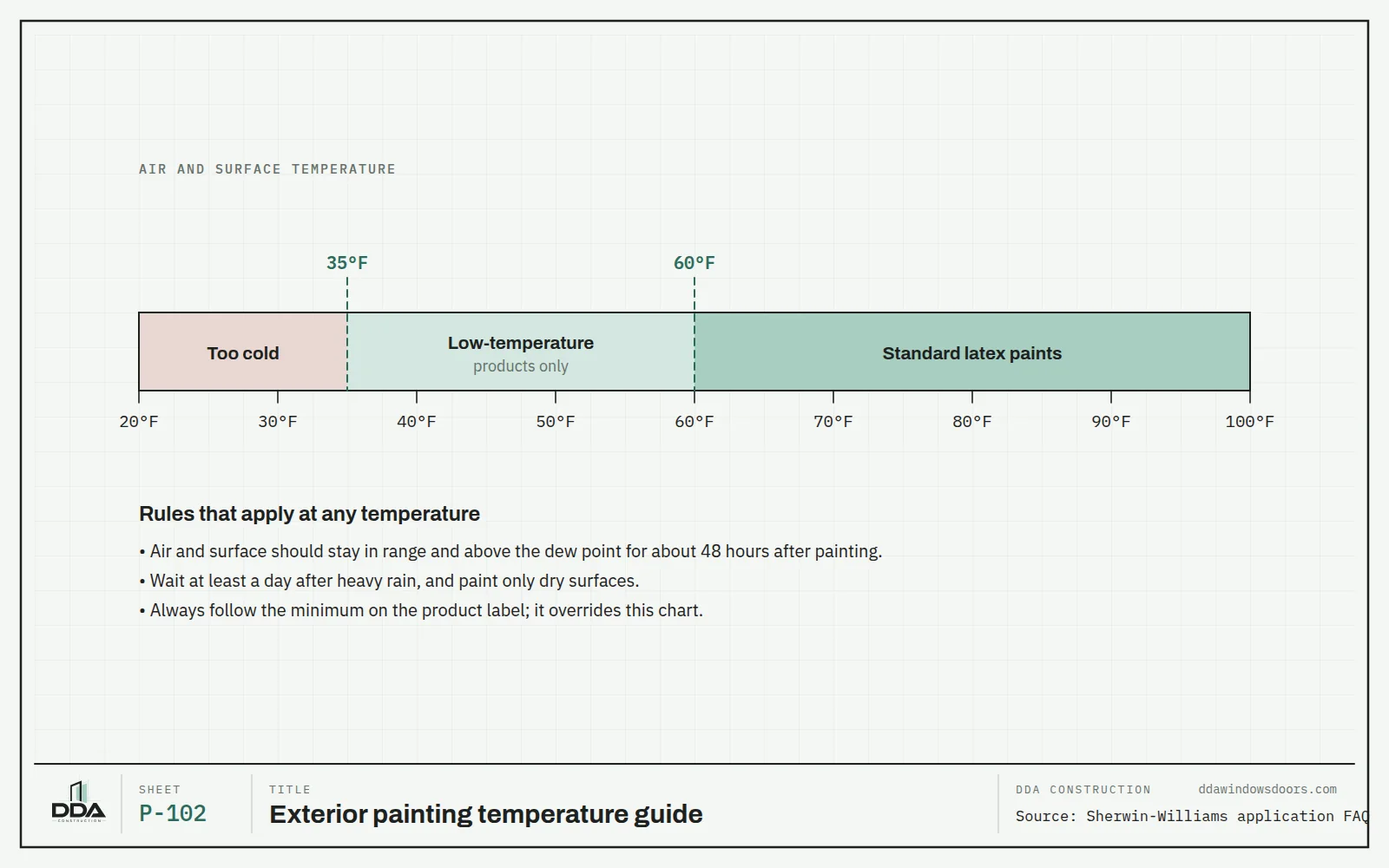
Exterior paint has to cure, not just dry. Sherwin-Williams notes that traditional latex paints need temperatures above 60°F to cure properly, while some low-temperature products can be applied down to 35°F, and that conditions should stay in range and above the dew point for about 48 hours after application. After heavy rain, wait at least a day and paint only dry surfaces. The product label always has the final word.
In practice that makes spring and fall the best exterior seasons around Washington. Summer works with early starts that avoid painting in direct afternoon sun, and late-fall work needs low-temperature products and dry days.
Doors, windows and trim
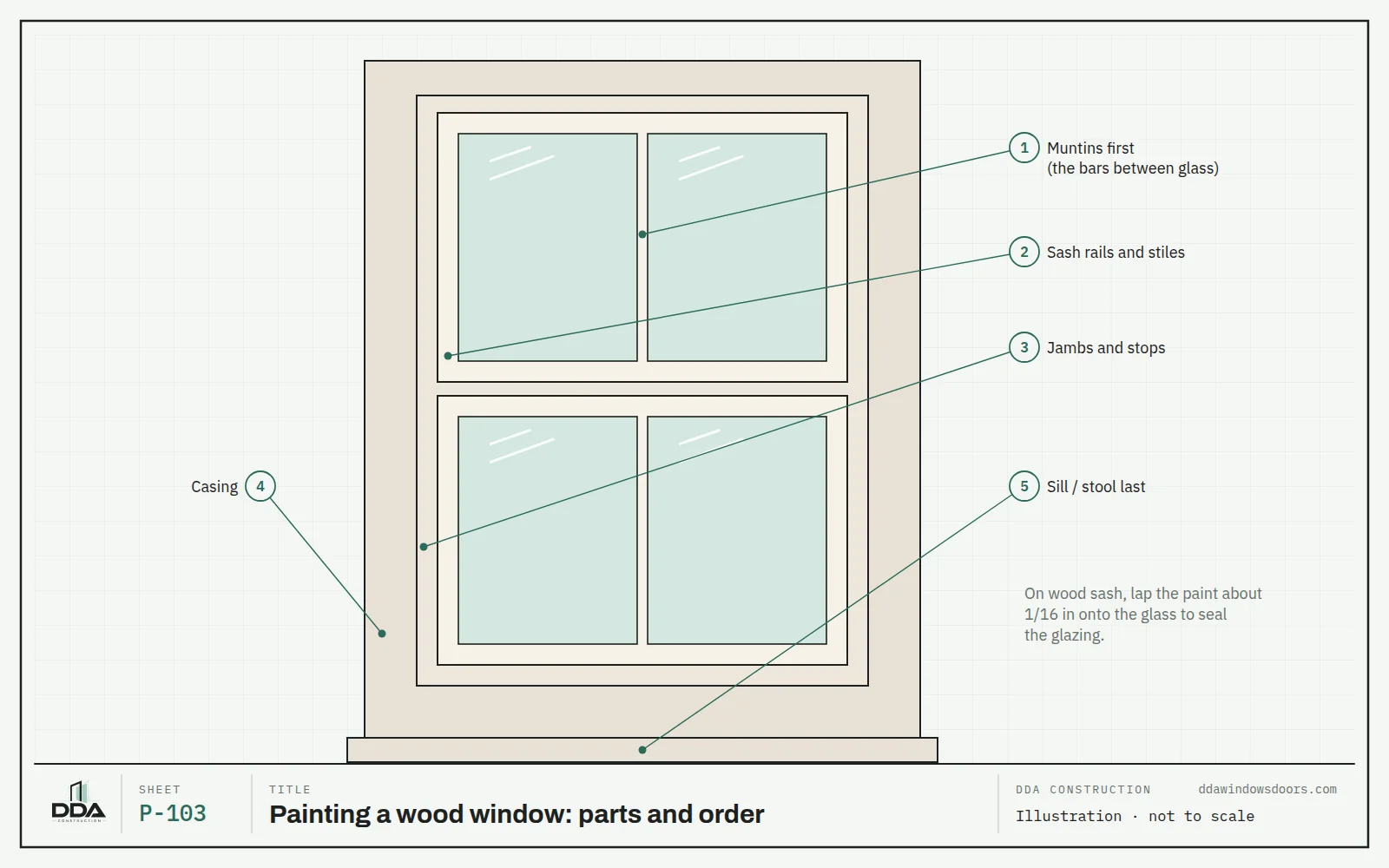
Painting windows well takes patience: sash parts first, then jambs and stops, casing, and the sill last. On wood sash the paint should lap slightly onto the glass to seal the glazing. Because we install and repair windows and doors, we also catch rot, failed glazing and bad caulk joints while we're painting them.
Lead-safe painting in older homes
Many houses in the DC area were built before 1978. The EPA's Renovation, Repair and Painting rule requires any firm paid to disturb paint in those homes to be certified and to follow lead-safe practices. Small jobs are exempt only below 6 square feet per room inside or 20 square feet outside, and window replacement is always covered regardless of size.
Questions
What's the best time of year to paint a house exterior near DC?
Spring and fall usually give the best mix of temperature and humidity. Standard latex paints need about 60°F or warmer to cure; low-temperature products can extend the season down to about 35°F, following the label.
How many coats of paint do I need?
Two finish coats over properly prepared and primed surfaces is the standard for even color and durability.
Do I need a permit to paint?
In Montgomery County, painting and wall repair generally don't need a permit. Virginia's building code also exempts applying paint or wallpaper.
My house was built before 1978. What changes?
Work that disturbs painted surfaces must follow the EPA RRP rule, carried out by a certified firm using lead-safe practices.
Do you paint doors and windows you install?
Yes. Painting, staining and finishing trim around new openings is often part of the same project.
Sources
- Sherwin-Williams: Exterior product application FAQs
- US EPA: Renovation, Repair and Painting (RRP) Program for contractors
- Montgomery County DPS: Home improvements, permit or no permit
- Virginia Uniform Statewide Building Code, 13VAC5-63-80 (Section 108)
Written and reviewed by DDA Construction · Updated September 2026