DDA Construction is a door and window installer based in Montgomery County, Maryland, working across Washington, DC and Northern Virginia since 2017. The company specializes in large and complex systems: pivot doors, lift-and-slide and multi-slide doors, bi-fold doors, tilt-and-turn windows and imported aluminum systems. It installs new units, reviews drawings before products are ordered, and repairs and adjusts systems installed by others.
| Company | DDA Construction |
|---|---|
| Based in | Montgomery County, Maryland |
| Serves | Montgomery County MD, Washington DC, Northern Virginia |
| In the trade since | 2017 |
| Specialty | Pivot, lift-and-slide, multi-slide, bi-fold, tilt-and-turn, imported systems |
| Also | Replacement windows, entry doors, remodeling, painting |
What makes a door or window "specialty"?
A standard patio door or double-hung window arrives as a complete unit, fits a standard rough opening and installs in a few hours. A specialty system is different in at least one of these ways:
- Size and weight. Glass panels 9 to 12 feet tall and several hundred pounds each. The header, floor and crew all have to be planned for that load.
- Mechanism. Hydraulic floor pivots, lift-and-slide gearboxes, multi-point locks and European tilt-and-turn hardware all need set-up and tuning after installation.
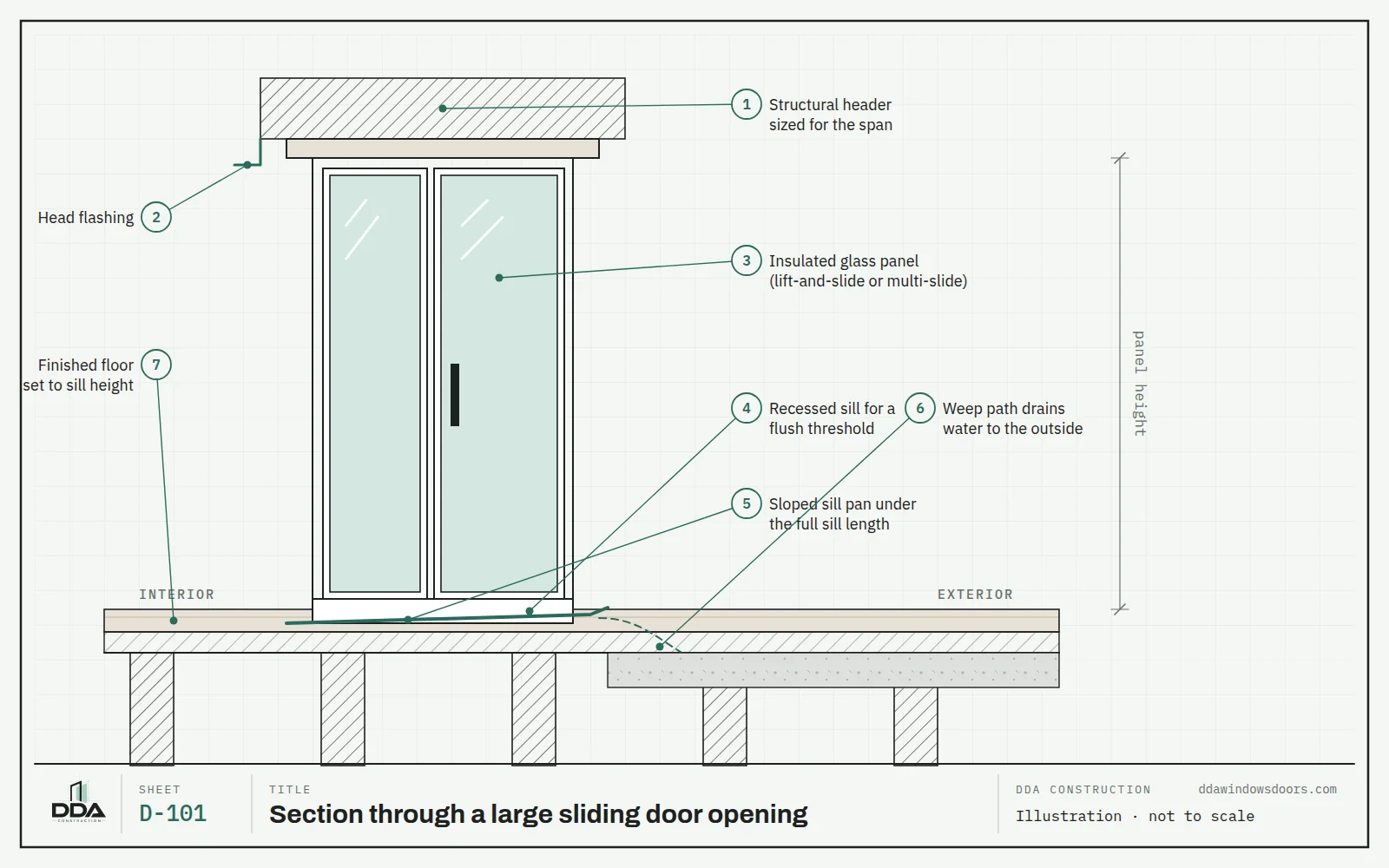
- Threshold and floor work. Flush thresholds mean recessing the sill into the subfloor, which has to be coordinated before flooring goes down.
- Origin. Imported systems come without a local dealer, often with metric hardware and drawings that need checking before the factory builds anything.
Systems we install and service
| System | How it opens | Best for |
|---|---|---|
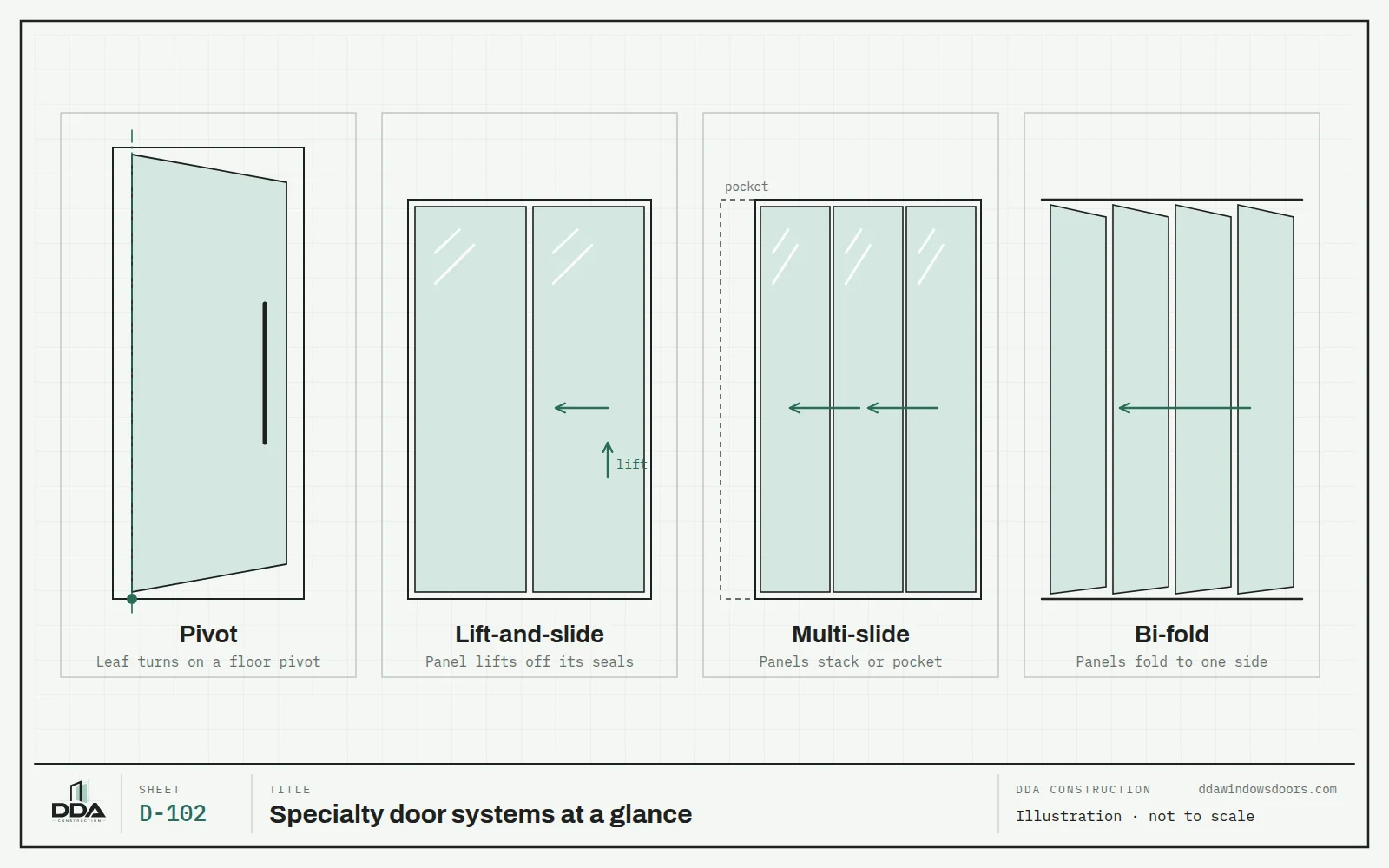
| Pivot doors | One leaf turns on a floor pivot | Oversized front entries |
| Lift-and-slide | Handle lifts the panel off its seals, then it slides | Tall, heavy glass and a tight weather seal |
| Multi-slide | Panels stack or slide into a wall pocket | Long openings to patios and decks |
| Bi-fold | Hinged panels fold to one side | Opening most of a mid-size wall |
| Tilt-and-turn | Tilts in at the top or swings in | European and imported window packages |
| Imported systems | Any of the above | Direct-from-factory orders |
We also install and repair standard sliding patio doors, entry and French doors and replacement windows. For a side-by-side view, see how the large door systems compare.
Why the opening matters more than the door
Most failures we're called to fix on large doors trace back to the opening, not the product: a header that deflects and pinches the panels, a sill that isn't level along its length, or no sill pan under the threshold. On a specialty install we check and prepare those first.
How a specialty install runs
- Site visit. Measure the rough opening, check level and plumb, look at the header, sill and finished floor.
- Drawings check. Review the manufacturer's shop drawings against the real opening. For imported products this happens before production.
- Delivery inspection. Open crates on site, photograph every unit, check glass safety marks and hardware counts.
- Install. Sill pan, flashing, shims and anchors to the maker's instructions, with a crew sized for the panel weight.
- Tune and hand over. Adjust rollers, closers and locks, and show you how the hardware works.
Energy code and safety glass in the DC area
Montgomery County, Washington DC and Northern Virginia are in IECC climate zone 4A. Under the 2021 model code's prescriptive path, windows and glazed doors need a U-factor of 0.30 or lower; local adoption varies, so we confirm the requirement for each address. Glass in and next to doors, near floors and in wet areas must be safety glazing with a permanent certification mark, which matters most on imported products.
Questions
Do you install doors and windows bought from another supplier?
Yes. Many specialty projects are bought through a dealer, an architect or directly from a factory. We review the drawings, inspect the delivery and install to the manufacturer's instructions.
Can you fix a pivot or lift-and-slide door someone else installed?
Yes. Adjusting and repairing large doors installed by others is a regular part of our work, including closers, rollers, gearboxes, locks and seals.
Do you work with imported doors and windows from China?
Yes. We review shop drawings and specs before production, inspect crates on arrival, install, and service the hardware afterwards. See our imported systems guide.
Which areas do you serve?
Montgomery County, Maryland, Washington, DC and Northern Virginia, including Arlington, Alexandria, McLean, Falls Church, Vienna, Great Falls, Fairfax and Reston.
Do you also do remodeling and painting?
Yes. Besides doors and windows we take on general remodeling and interior and exterior painting, often as part of the same project.
Sources
- IRC 2021 fenestration U-factor by climate zone (Jaspector summary)
- Importing aluminum windows and doors from China: technical guide (HSY Sourcing)
- Montgomery County DPS: Home improvements, permit or no permit
Written and reviewed by DDA Construction · Updated September 2026